Rome, June 17, 1800
Cesare Angelotti, a former Consul of the Roman Republic, escapes political imprisonment at the Castel Sant’Angelo and seeks shelter in the Sant’Andrea della Valle church. There, his sister the Marchesa Attavanti has hidden a key to their family chapel. Inside their chapel, the Marchesa also left Angelotti some women’s clothing to use as a disguise in his escape.
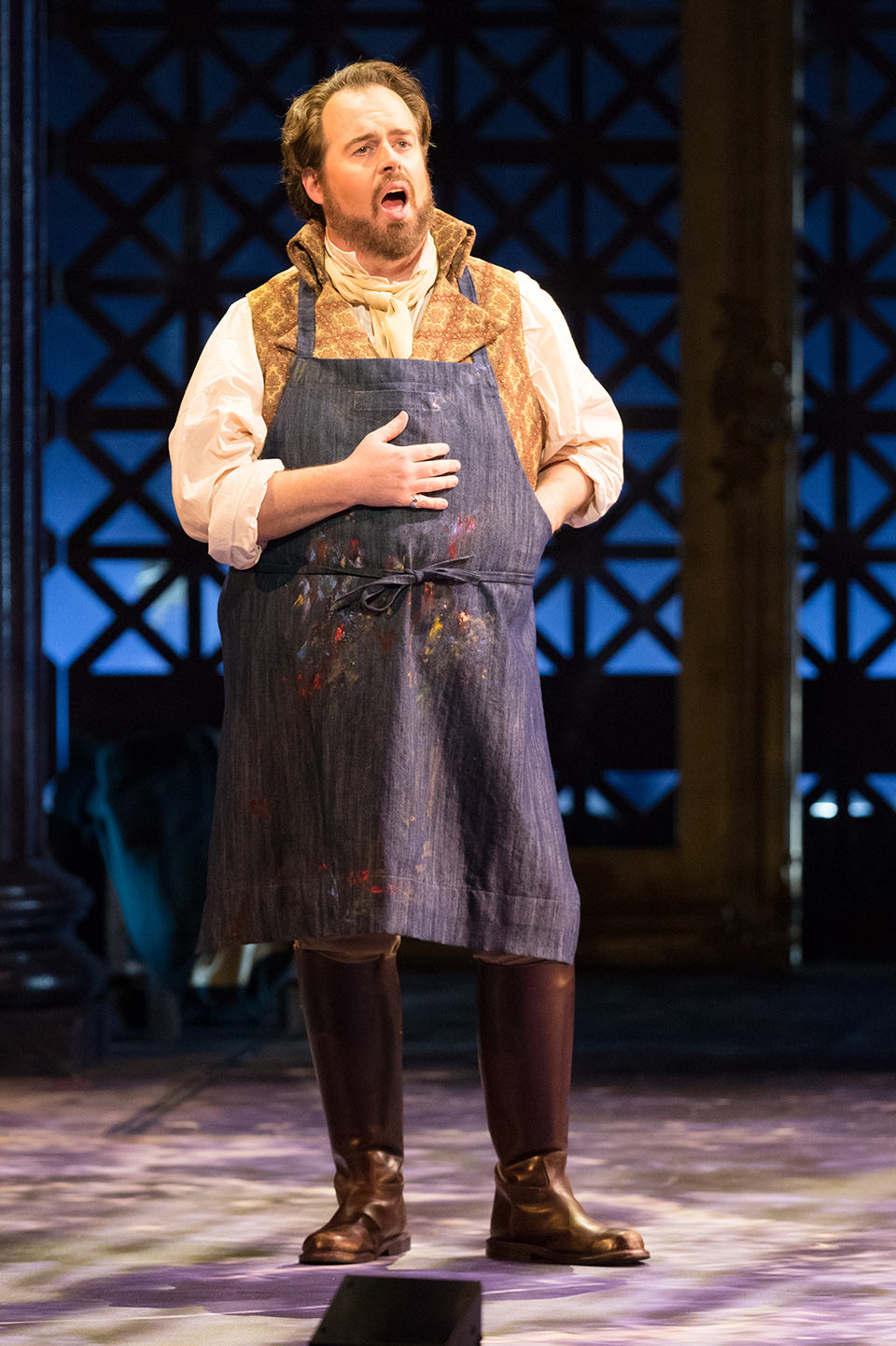
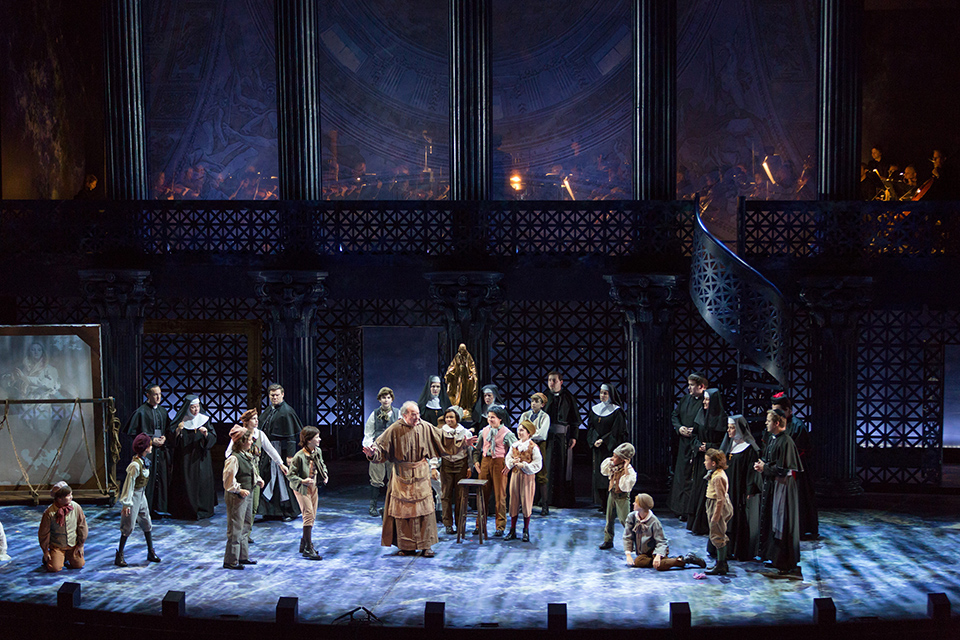
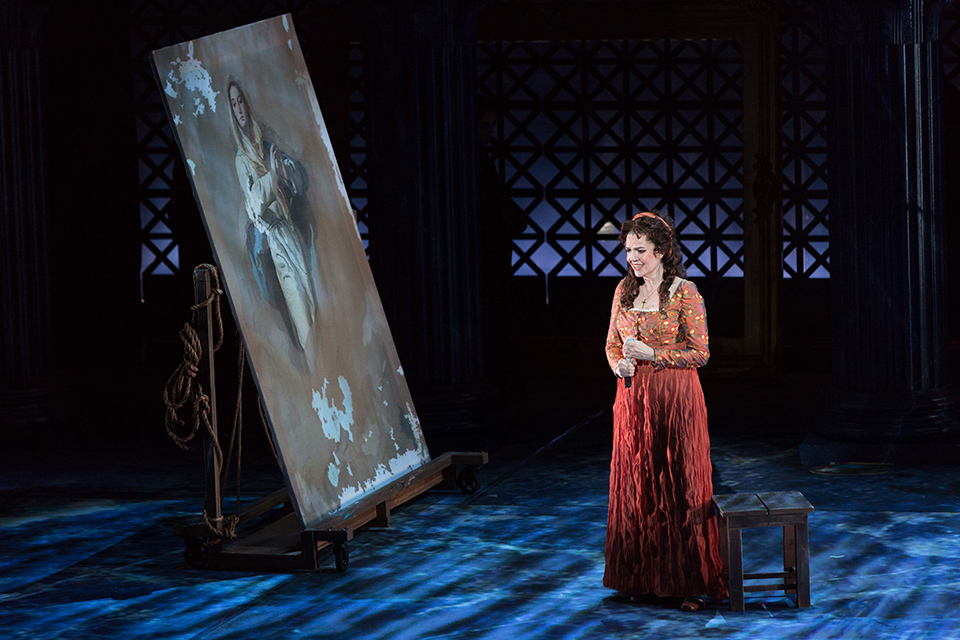
A Sacristan enters and busies himself with his daily tasks, which include keeping the painter Mario Cavaradossi’s brushes clean. Cavaradossi arrives to resume work on his painting of Mary Magdalene. Knowing Cavaradossi to be sympathetic to his cause, Angelotti emerges to greet him. Cavaradossi promises to help but Angelotti must hide again with the arrival of Cavaradossi’s lover, the opera singer Floria Tosca.
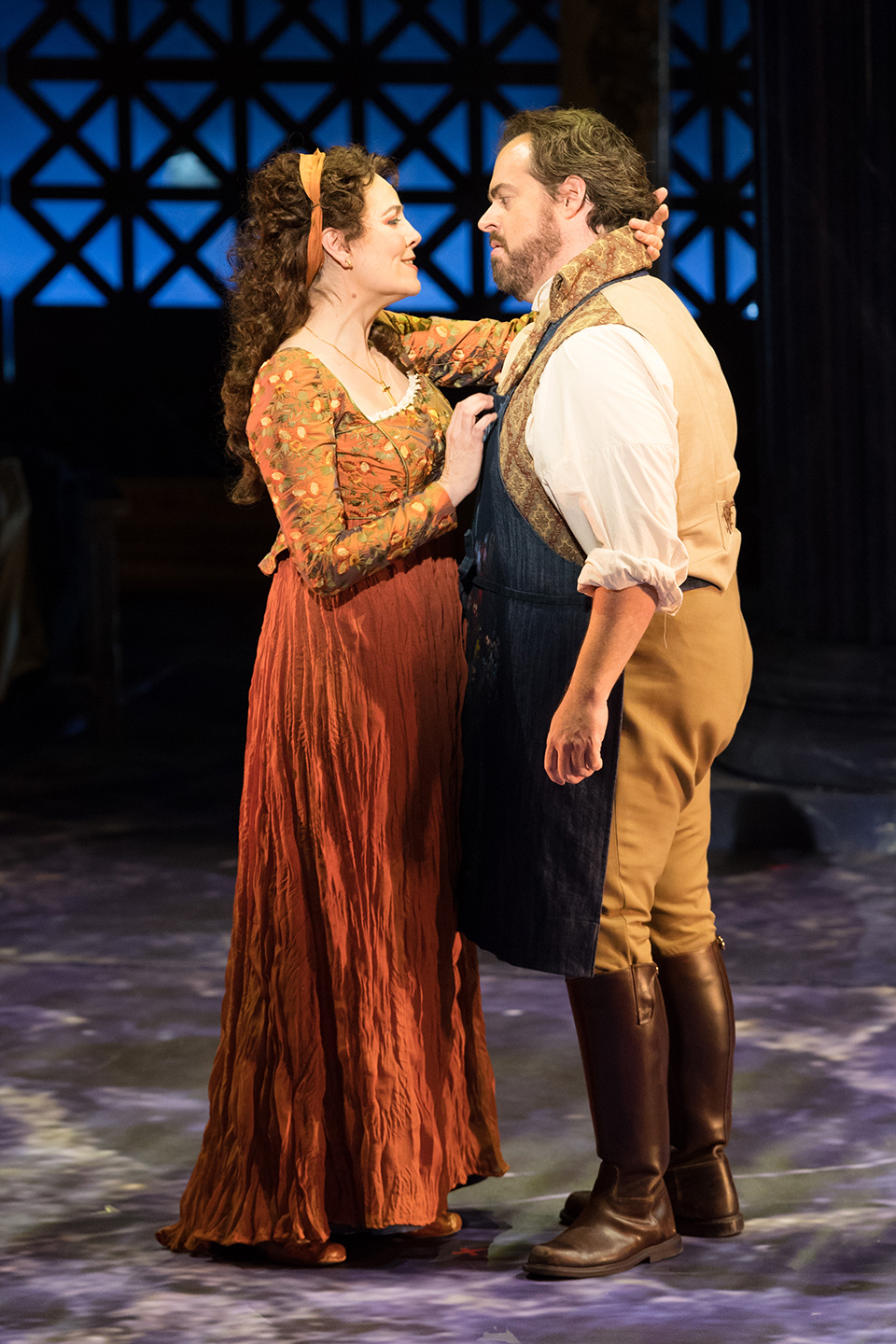
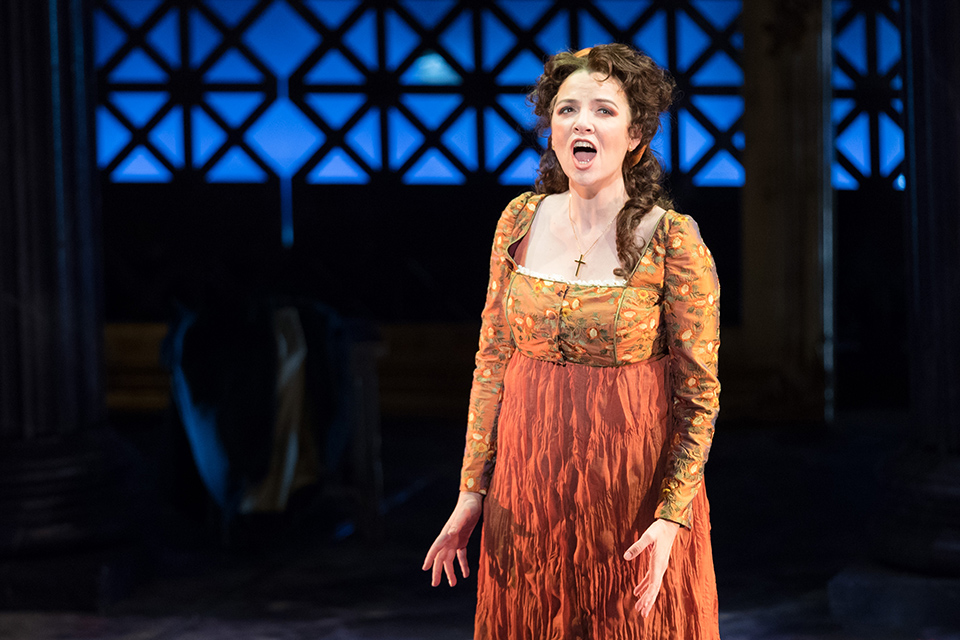
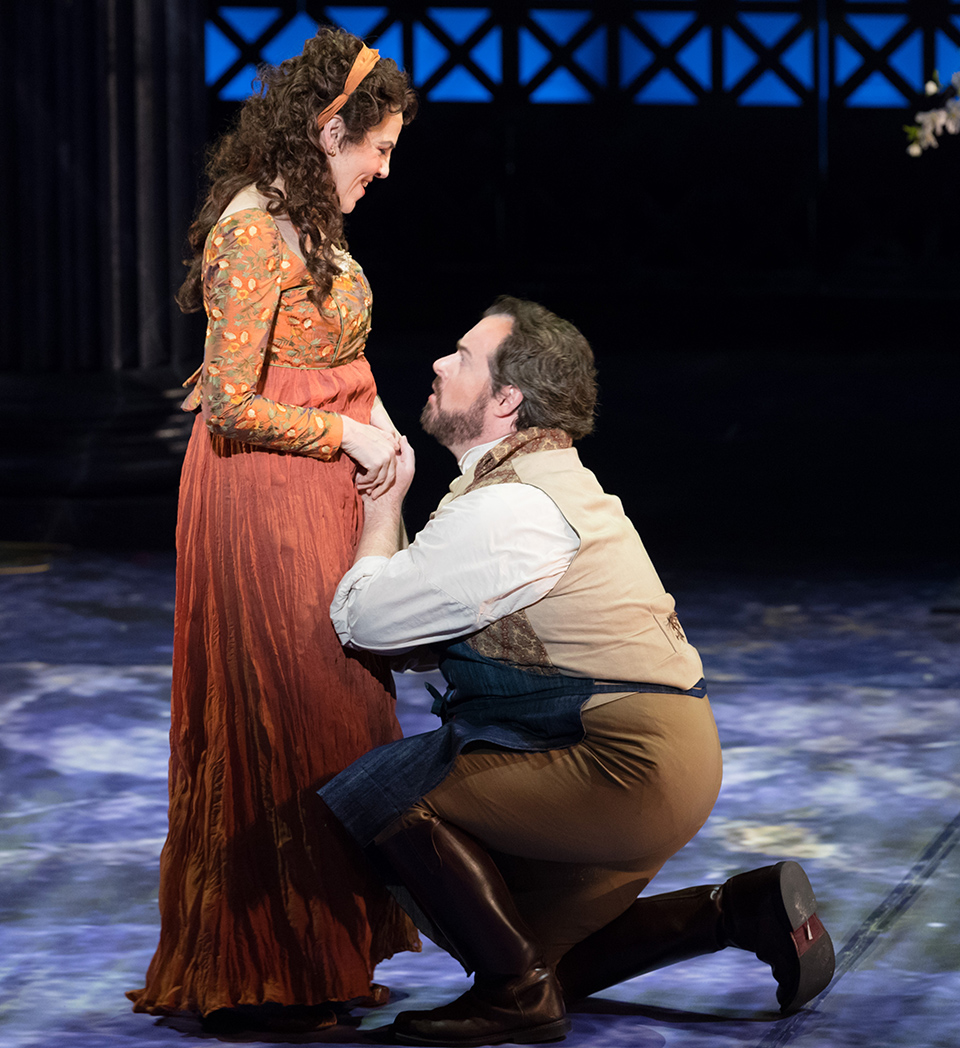
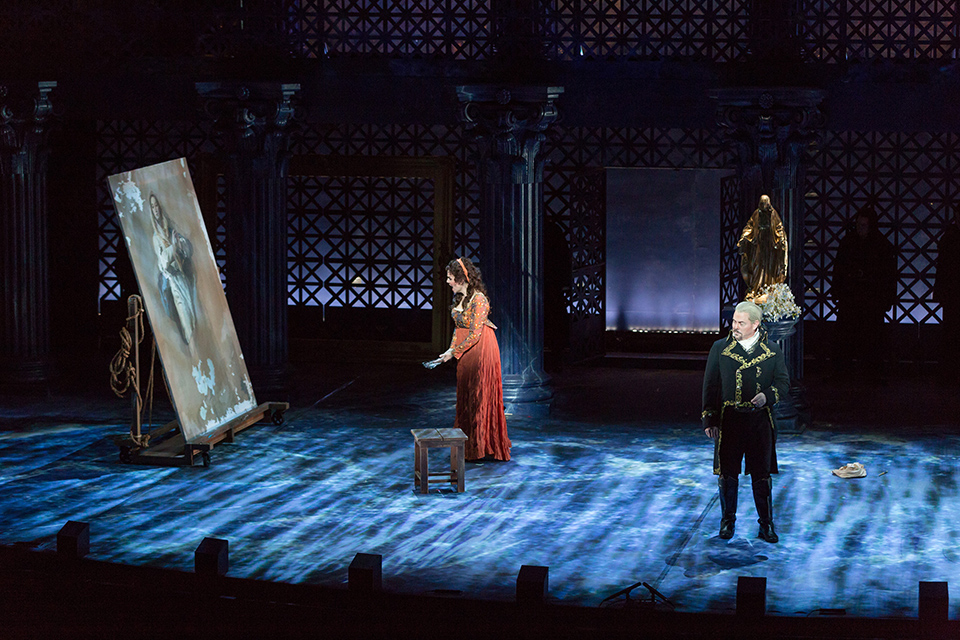
Pious but insecure, Tosca accuses Cavaradossi of hiding another woman. His inspired painting of Mary Magdalene fuels her suspicion that he has both a new model and love interest. She agrees to leave him to his work only after repeated assurances of his love for her. Alone again, Cavaradossi gives Angelotti a key to his villa outside of Rome and tells him of a secret passage inside an old well in the villa’s garden. The two men hear the sound of a cannon firing, a signal that Angelotti’s escape from prison was discovered.
Searching for Angelotti, Baron Scarpia, a pitiless enforcer of the law, arrives at the church with his henchmen. In their search of the premises, the men discover a fan bearing the Attavanti coat of arms. The fan was a part of the disguise Angelotti’s sister hid for him that he accidently left behind.
Tosca returns to the church looking for Cavaradossi but finds Scarpia and his men instead. Scarpia lays a trap for Tosca using the Attavanti fan. Offering it as proof of Cavaradossi’s unfaithfulness, Scarpia correctly suspects that after their confrontation, an enraged Tosca will lead them straight to Cavaradossi and Angelotti under his protection. Scarpia orders his men, including Spoletta, to follow Tosca. While a procession enters the church singing the Te Deum, Scarpia privately reveals his desire to possess Tosca and kill Cavaradossi.
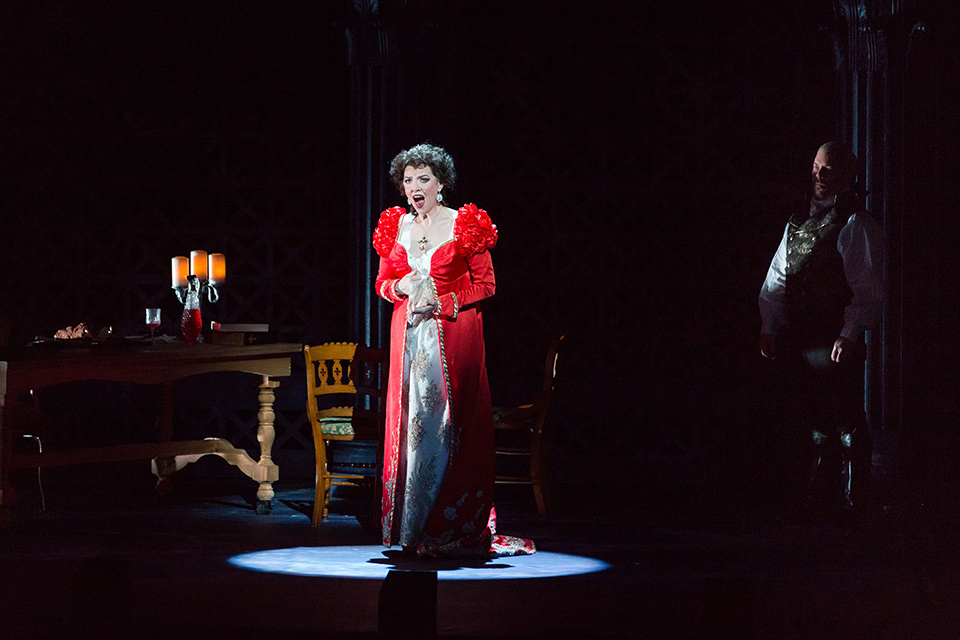
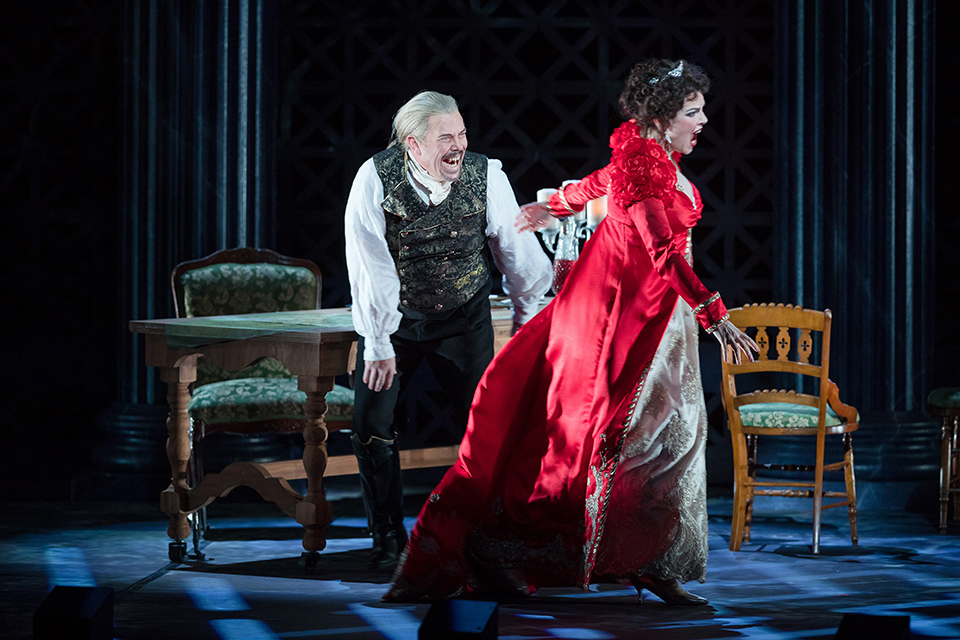
In his quarters in the Palazzo Farnese, Scarpia dines alone. After Tosca led Scarpia’s men to him, Cavaradossi was arrested. But they were unable to find Angelotti hiding in the secret passage in the well. Scarpia sends a note to Tosca, asking her to come to his apartment. Scarpia questions Cavaradossi who denies any knowledge of Angelotti. Tosca arrives just in time to see Cavaradossi taken away to be tortured. Cavaradossi tells her to reveal nothing. Scarpia describes to Tosca the unspeakable pain he will inflict on Cavaradossi if she will not tell him where Angelotti is hiding. After enduring Cavaradossi’s screams, Tosca reveals the secret hiding place in the well.
Scarpia ends Cavaradossi’s torture but refuses to release him unless Tosca agrees to give herself to him. In despair, she agrees. Scarpia instructs his henchman, Sciarrone, to arrange a mock execution, and gives Tosca written assurance of safe passage for her and Cavaradossi out of Rome. Rather than relinquishing herself, Tosca seizes Scarpia’s dinner knife and stabs him. With Scarpia dead before her, Tosca forgives him.
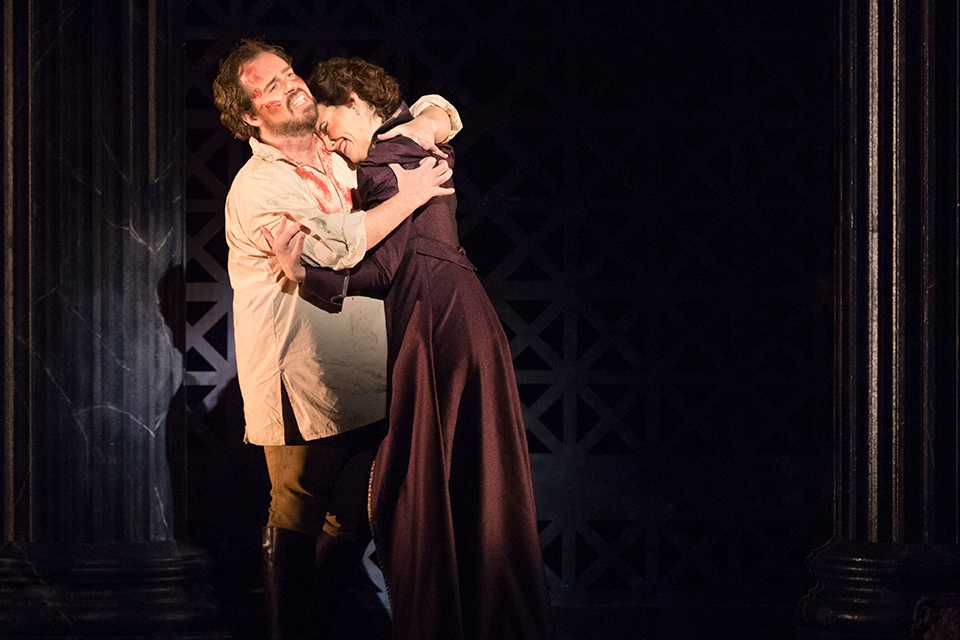
In the Castel Sant’Angelo, Cavaradossi is awaiting his execution. Sciarrone brings Cavaradossi his last meal. In exchange for a ring, Sciarrone gives Cavaradossi paper to write to Tosca, but she unexpectedly arrives and tells him all that has happened. She explains to Cavaradossi that his pending execution will be fake: that he must fall, to pretend to be shot, but they will then be able to leave Rome together. Cavardossi is amazed by her courage but soon faces his executioners.
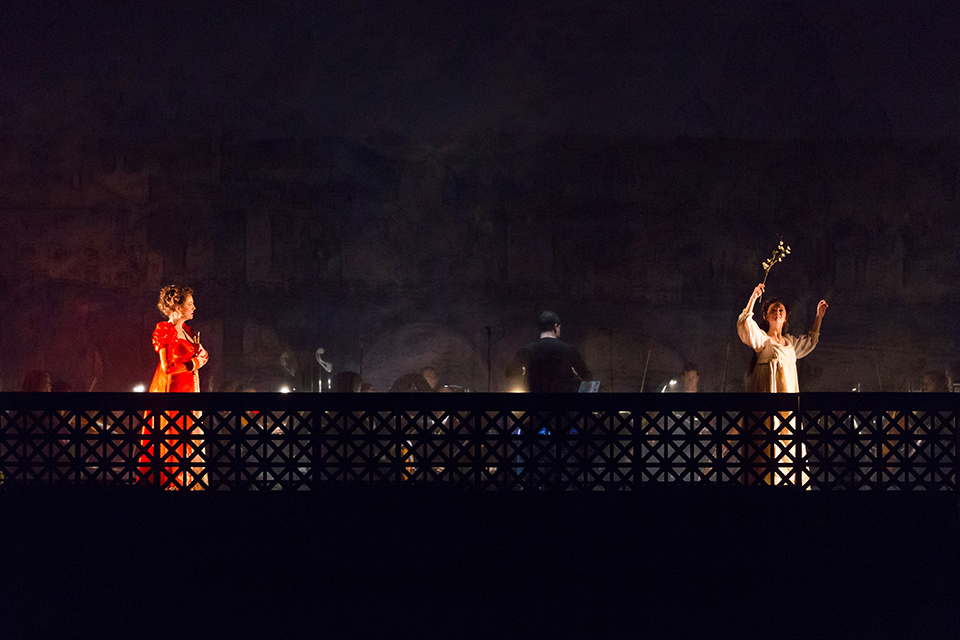
Tosca watches the execution from a hiding place. The henchmen fire and Cavardossi falls. Tosca rushes to him, only to find him dead. Betrayed by Scarpia and with his henchmen closing in on her, Tosca takes her own life.